
At Designing Smiles, we see this more often than you'd think, and we don't think anxious patients should have to white-knuckle their way through basic care. Our team offers oral and nitrous sedation options designed to take the edge off, so a cleaning, filling, or extraction feels manageable instead of dreaded, and so putting off care out of fear stops being the default.
Nitrous oxide, sometimes called laughing gas, is delivered through a small nasal mask and takes effect within a minute or two. You’ll stay awake and be able to respond to questions, but the gas brings on a light, floaty calm that makes the sound of the drill or the pressure of an instrument much easier to tune out. Since it wears off almost as fast as it kicks in, most people are clear-headed enough to drive themselves home shortly after the appointment ends, which makes it a convenient option for anyone who is juggling a busy work schedule or school pickup.
Oral sedation works differently and comes in the form of a prescribed pill taken before the visit, producing a deeper, longer-lasting sense of relaxation. Oral sedation can leave patients with little memory of the appointment afterward. This route is often a better fit for longer procedures, more involved restorative work, or for patients whose anxiety runs deeper than a mild case of nerves. The effects last well past the appointment itself, so patients who choose oral sedation need a friend or family member to handle the drive home and to keep an eye on them for the rest of the day.
Book Now
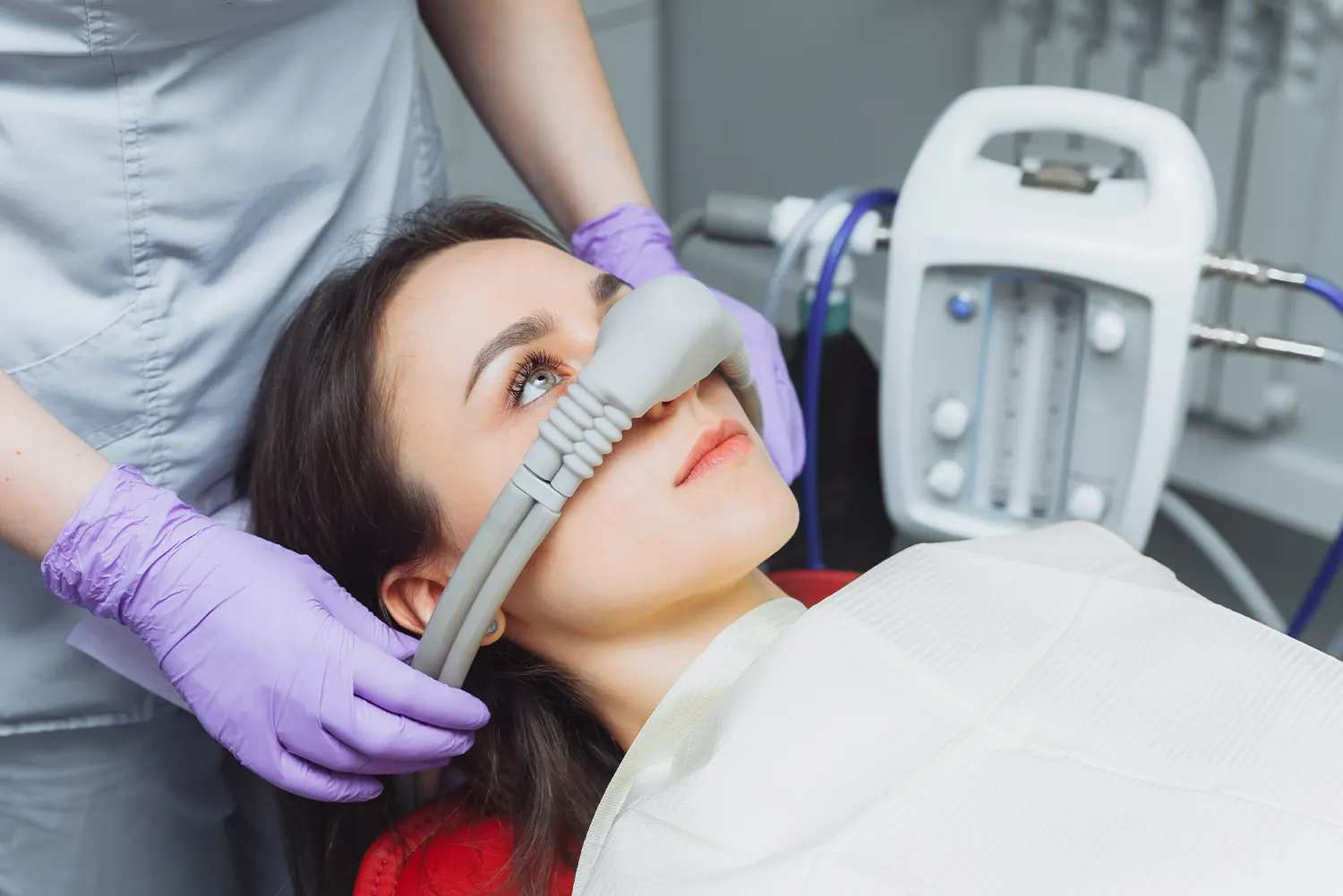
Whichever option fits a patient's situation, we discuss the choice together rather than defaulting to one approach for everyone. That conversation covers the procedure itself, how long it's expected to take, any medications currently being taken, and what recovery will realistically look like once the appointment wraps up.
Vital signs are monitored throughout any sedated appointment, and dosing follows established safety protocols rather than guesswork. According to the American Dental Association, nitrous oxide-oxygen sedation carries an inherent safety margin when properly administered, supported by delivery systems with built-in safety features and ventilation practices that keep exposure well within recommended limits. We take that same level of care seriously in our own office, from equipment maintenance to how closely we monitor patients throughout treatment.
Dental anxiety shows up in a lot of forms, and sedation isn't reserved for a single type of patient. We regularly recommend it for people who've avoided the dentist for years out of fear, patients with a strong gag reflex that makes routine work difficult, and anyone facing a procedure that requires sitting still for an extended stretch of time. It can also help those with limited mobility, sensory processing differences, or certain medical sensitivities who find a fully alert appointment physically exhausting rather than simply unpleasant.
Before recommending either option, we review a patient's full medical history, current medications, and the specific procedure planned. Some patients come to us already knowing sedation is what they want, while others are only just starting to consider it after years of putting off treatment. A few signs tend to point toward one form of sedation over the other:
Nitrous oxide is usually enough to take the edge off without extending recovery time or requiring a driver.
Oral sedation often provides the level of calm needed to get through longer or more involved work without added distress.
Patients bothered by dental sounds, smells, or sensations sometimes respond better to the more immersive relaxation oral sedation provides.
Since nitrous wears off quickly, it suits patients who need to drive themselves afterward and get back to their day.
Whichever path makes sense for a given patient, the goal is always to help you get necessary care done without the appointment becoming its own source of dread, and without years slipping by in the meantime.
Being a locally owned, family-friendly practice means we treat toddlers getting their first cleaning and grandparents catching up on years of missed care, often in the same afternoon. That range gives us a lot of practice reading anxiety in patients of every age and adjusting our approach instead of running one script for everybody, whether that means a slower pace, more explanation along the way, or sedation itself.
We also keep as much of a patient's care as possible under one roof. When sedation is part of a broader treatment plan, whether that includes restorative work, an extraction, a root canal, or general preventive dentistry, our team coordinates it directly rather than shuffling you around between outside offices. That continuity matters most for anxious patients, who benefit from seeing familiar faces and a practice that already knows their history rather than starting over with a new provider at every step.
We also accept PPO insurance, including Delta Dental, Cigna, Aetna, and MetLife, and we offer payment plans for patients paying out of pocket. No insurance, no problem, and our team can help you understand what a sedation visit is likely to cost before anything is scheduled.
If dental anxiety has kept you or someone in your family from getting care, oral and nitrous sedation might be the difference between another year of avoidance and finally getting it handled. Dr. Ryan Rose and the team take the time to explain what each visit will actually feel like, going through the process step by step so there are no surprises once you're here.
To talk through which sedation option fits your situation, contact our office in Westchase today. We’re happy to answer any questions or get scheduled for your next visit.
Schedule Your Consultation