New patients welcome. Call today to ask about teeth whitening, insurance, and payment plans, or book online anytime.
It's a service we offer as part of our broader cosmetic dentistry care at Designing Smiles in Westchase. Our team will guide you through the options in a way that's honest about what to expect, what's realistic for your teeth, and how to protect your results once you've achieved them.
Tooth discoloration generally falls into two categories: extrinsic stains that build up on the surface of the enamel from food, drinks, and tobacco, and intrinsic stains that develop inside the tooth itself, often from aging, certain medications taken during childhood, or old trauma. According to the American Dental Association, extrinsic stains respond well to both mechanical cleaning and whitening products, while intrinsic stains typically require a chemical bleaching process to lighten from within.
Book Now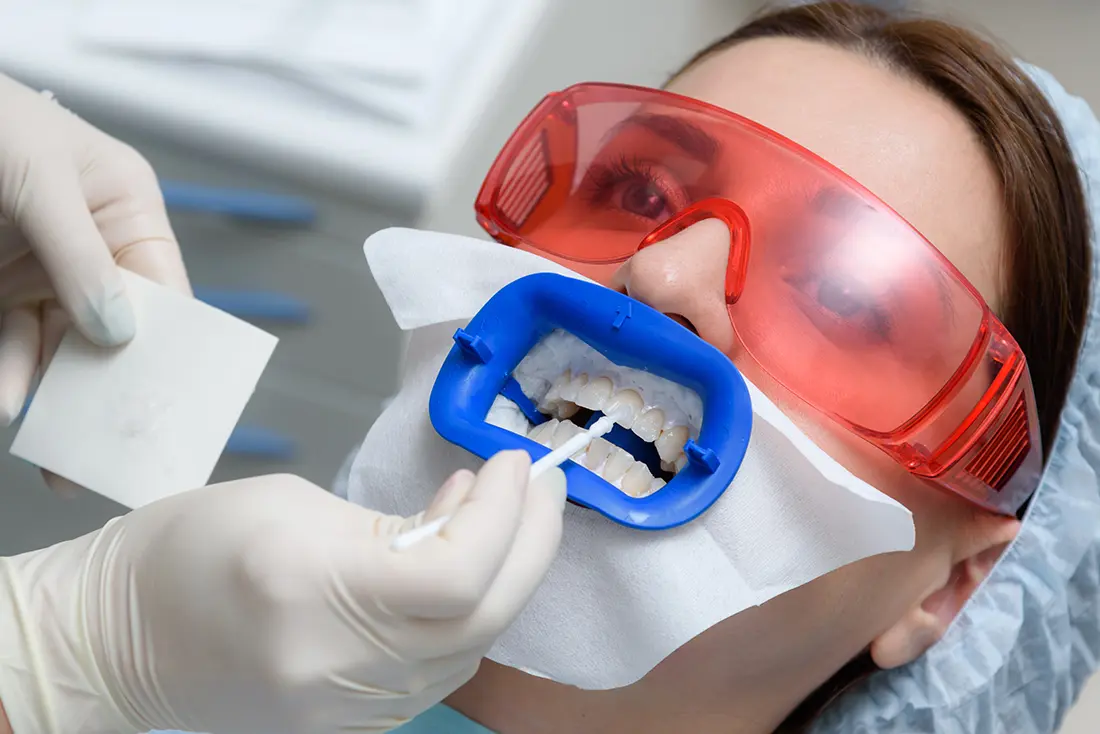
Understanding which type of staining you're dealing with matters because it determines which treatment will actually work. Someone with mostly surface staining from years of coffee and wine may see dramatic results from a single in-office visit, while a person with deeper intrinsic staining, like the kind that comes with age, may need a longer at-home protocol to reach the shade they're hoping for. This is exactly why we start with an exam before recommending a path forward, rather than guessing based on how your smile looks in the waiting room mirror.
Diet and lifestyle habits also play a bigger role in staining than most patients realize. Dark, pigmented beverages like coffee, tea, and red wine are common culprits, but so are everyday foods like tomato sauce, berries, and soy sauce, which can gradually deepen staining even with good brushing habits. Tobacco use is another major factor, and it tends to cause a more stubborn, yellow-brown discoloration that responds more slowly to whitening than stains from food or drink alone. Knowing what's contributing to your particular staining pattern helps us set expectations for how many sessions or how long an at-home protocol might take before you get to your desired shade.
We offer both in-office teeth whitening and at-home teeth whitening for Westchase patients, and the right choice usually comes down to your timeline, your budget, and how quickly you want to see a change. In-office whitening uses a higher concentration of bleaching gel under professional supervision, which means most people see a noticeably brighter smile in a single appointment. At-home whitening relies on custom-fitted trays and a dentist-prescribed gel that you use over a period of days or weeks, which tends to produce a gentler, gradual result with less sensitivity for those who are more prone to it.
Some patients combine both approaches, starting with an in-office session to get a quick boost before an event and following up with at-home trays to maintain and extend the results. If you're also dealing with more significant cosmetic concerns like chips, gaps, or misshapen teeth, a whitening treatment can be paired with veneers for a more complete smile transformation.
Custom trays also tend to outperform generic, one-size-fits-all trays you'd find at a drugstore. Since they're molded specifically to your teeth, the whitening gel stays in contact with your enamel more evenly and is less likely to seep onto your gums, which is one of the more common causes of irritation with over-the-counter kits. This is part of why professionally supervised whitening tends to deliver more consistent, longer-lasting results.
Whitening is considered a safe, well-studied cosmetic procedure when it's performed under professional guidance, though it isn't without side effects. Temporary tooth sensitivity and mild gum irritation are the most commonly reported effects of vital tooth whitening, and both are typically short-lived once treatment ends. Our team fits your trays carefully and monitors your peroxide concentration and wear time so that you get real results without unnecessary discomfort.
We also make a point of setting realistic expectations before you begin. Whitening only works on natural tooth structure, so if you have crowns, veneers, or fillings on visible teeth, those restorations won't lighten along with the rest of your smile. We'll talk through this during your consultation so there are no surprises once treatment is complete, and so the final result looks as even and natural as possible.
Once your treatment is finished, maintaining your results is fairly straightforward. Sticking to good oral hygiene, using a straw for dark beverages when you can, and scheduling regular dental cleanings all help slow the return of surface stains. A touch-up treatment every so often may be all it takes to keep your smile at the shade you love, rather than needing a full whitening process repeated from scratch.
Here are answers to common questions about whitening.
Designing Smiles has built its reputation in Westchase on personalized care delivered by a team that treats every patient like family, and that same approach carries through our cosmetic services. Whether you’re looking to get subtle brightening before a big event or a more dramatic shade change as part of a larger smile makeover, we take the time to understand what you want your smile to look and feel like before recommending a plan. Our office also works with PPO insurance and offers payment plans, so a brighter smile doesn’t have to wait for the right time financially.
If you’re ready to see what a professionally whitened smile could look like for you, our team would be glad to show you your options and answer any questions you have about the process. You can contact our office to schedule a consultation and get started on a whiter, brighter smile.
