A chipped edge, a tooth that resisted every whitening treatment, a small gap that shows every time you smile — these concerns are more common than most people realize, and they rarely appear alone. When a patient comes in with two or three cosmetic concerns at once, the most efficient path forward is often a single restoration that addresses all of them at the same time. That is exactly what veneers are designed to do, and why they remain one of the most requested cosmetic dentistry treatments for patients throughout Westchase, Citrus Park, and the surrounding Tampa area.
At Designing Smiles, Dr. Ryan Rose and Dr. Angela Hilton-Foley place custom porcelain veneers as part of a thoughtful treatment process that starts with understanding your specific goals. Dr. Rose brings over a decade of clinical experience and completed an Advanced Education in General Dentistry residency, while Dr. Hilton-Foley has earned more than 900 hours of continuing education and has been practicing in Florida since 1991. Our team takes a conservative approach, preserving as much of your natural tooth structure as possible while still delivering the cosmetic improvement you are looking for.

Most cosmetic treatments address one concern at a time. Teeth whitening changes color only. Dental bonding fixes a chip but wears sooner and stains over time. Orthodontic treatment corrects alignment, but it takes months and does not change color or shape. Veneers occupy a different category entirely because a single porcelain shell can simultaneously correct color, shape, size, and minor spacing issues in one coordinated treatment plan.
Porcelain is the preferred material for veneers at our practice because it closely mimics the way natural tooth enamel reflects light. The result looks natural rather than artificial, and porcelain’s resistance to staining means the color holds up over years of coffee, tea, and everyday wear. Each veneer is fabricated by a dental lab to match the specific shade, contour, and translucency that fits your smile.
For patients with more extensive structural issues or significant decay, we may recommend a dental crown instead, which covers the entire tooth rather than just its front surface. Our team will walk you through the options at your consultation so you can make the choice that fits your goals and your budget.
Veneers are often the right choice when a patient has more than one cosmetic concern rather than a single isolated issue. The front surface of a tooth can look different from neighboring teeth due to color, size, shape, or minor spacing, and a veneer can address all of those in a single restoration. Common reasons our Westchase patients consider veneers include the following.
For patients with more significant structural damage or active decay, a dental crown may be the more appropriate restoration, since it covers the entire tooth rather than just the front surface. If a chip is small and isolated, dental bonding may be a faster and less invasive option. Our team will assess your specific situation and walk you through which approach fits best.
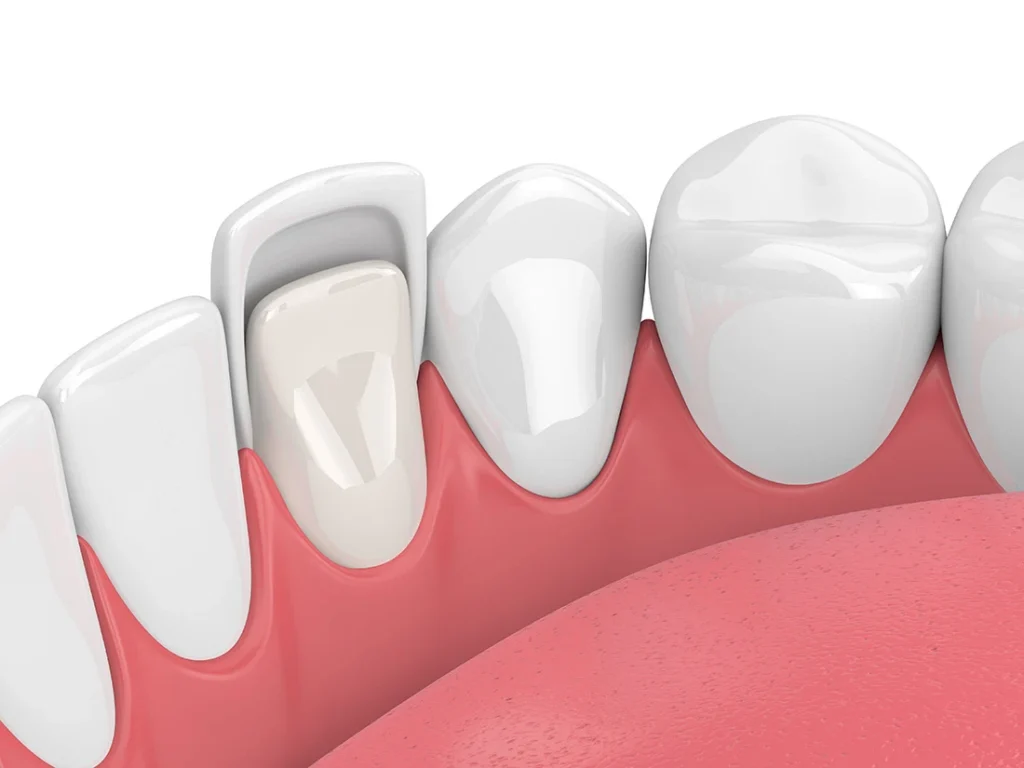
Veneers work best for patients who are already in good oral health and are looking to address cosmetic concerns rather than structural or functional problems. Before veneers can be placed, any active decay or gum disease needs to be treated first — placing a veneer over an unhealthy tooth creates bigger problems down the line. Patients with very little remaining enamel may also need to consider an alternative, since porcelain bonds to enamel for its hold.
Patients who grind their teeth at night can still be candidates for veneers in many cases, but we typically recommend a night guard as part of the treatment plan to protect the restoration. The best way to know for certain is a conversation with Dr. Rose or Dr. Hilton-Foley, where we can look at your specific teeth and talk through your options.
Getting veneers is a two-appointment process at our Westchase practice, and most patients are surprised by how straightforward it is. Before any preparation begins, we start with a consultation to review your goals, examine your teeth and gums, and confirm that veneers are the right fit for your situation.
Veneers are also frequently used as part of a broader smile makeover when a patient wants to address multiple concerns in one coordinated treatment plan. In those cases, we sequence the treatments so every piece works together for a balanced final result.
Porcelain veneers hold up well over time with the same habits that protect natural teeth. Brushing and flossing consistently prevents decay from forming at the edges where the veneer meets the tooth, which is the most common maintenance concern over a veneer’s lifespan. Patients should also schedule routine professional cleanings so our team can inspect the veneers and catch any changes early.
Patients who grind their teeth at night, a condition called bruxism, should talk with us about a custom night guard. Grinding places force on the edges of veneers and can chip or loosen them prematurely. Avoiding biting into very hard objects, like ice or hard candies, with the veneered teeth is also a good habit to maintain. With consistent daily care, veneers can last a decade or more while holding their shape and color.
The Westchase and Citrus Park area serves a large working professional population that tends to prioritize cosmetic care and understands the investment involved. Porcelain veneers are a common request in this market precisely because they address several concerns efficiently and hold their results well over time. Our practice accepts PPO insurance, and while veneers are generally considered a cosmetic procedure, our team can review your coverage and discuss payment plan options during your consultation.
The American Dental Association notes that porcelain veneers are a well-established, minimally invasive option for cosmetic correction, with full crown preparations requiring significantly more tooth reduction by comparison. The conservative nature of the preparation is one reason many patients in good oral health choose veneers over more extensive restorations when cosmetic improvement is the primary goal. You can find additional patient-facing information on veneers and other cosmetic treatments at MouthHealthy.org, the ADA’s consumer resource.
With proper care, porcelain veneers can last 10 to 15 years or more. Longevity depends on daily oral hygiene habits, avoiding biting hard objects with the veneered surfaces, and attending routine checkups. Patients who grind their teeth should wear a night guard to extend the lifespan of the restoration.
The preparation appointment is done with local anesthesia, so you should not feel discomfort during the procedure. Some patients notice mild sensitivity to temperature in the days following the preparation, which typically resolves on its own. By the second appointment, when the final veneers are bonded in place, most patients report very little to no discomfort.
Porcelain veneers are generally considered a cosmetic procedure and are not typically covered by dental insurance. Our team can review your PPO plan at the time of your consultation and discuss what, if anything, may apply. Payment plans are available for patients who want to spread the cost over time. No insurance is not a barrier to care — please ask our team about your options.
Porcelain veneers are lab-fabricated, highly stain-resistant, and typically last 10 to 15 years or more. Composite veneers are applied chair-side using a tooth-colored resin, which makes them faster and more affordable up front, but they stain more easily and generally require more upkeep over time. For patients seeking a durable, natural-looking, longer-term result, porcelain is the preferred choice at our practice.
Dental bonding is a good fit for small, isolated chips or minor imperfections where a quick, less invasive fix is the priority. Veneers are the better long-term investment when a patient wants to address multiple concerns at once, or when they need a result that holds its color and shape for many years without frequent touch-ups. Our team can walk you through both options at a consultation so you can choose what fits your goals and budget.
Porcelain veneers cannot be whitened with traditional bleaching treatments, so it is important to choose the shade you want at the outset. Patients who plan to whiten their natural teeth should do so before veneers are placed so the veneers can be matched to the desired final color. The good news is that porcelain is highly stain-resistant, so the color you select tends to hold well over time with normal care.
Every patient who considers veneers has a different combination of concerns, and our team takes the time to understand what matters most before recommending a treatment path. Dr. Rose and Dr. Hilton-Foley look at the whole smile, not one isolated tooth, so the final result looks balanced and natural from every angle. You can learn more about our approach to cosmetic care on the practice’s About page.
If chips, staining, or spacing have been holding your smile back, veneers may be the direct solution you have been looking for. Reach out to contact our office to schedule a consultation and find out if veneers are the right option for you.