A missing tooth changes more than how your smile looks. It can throw off your bite, put extra strain on the teeth around it, and eventually affect the bone underneath. An implant crown replaces that tooth from the root up, giving you back the strength and appearance of a natural tooth rather than just filling the gap.
At Designing Smiles, we place implant crowns as part of a broader set of restorative dentistry services available right here in Westchase. Whether you’re replacing a tooth lost to decay, injury, or a failed prior treatment, we walk you through what the process looks like and what to expect at each stage
Losing a permanent tooth is far more common than most people expect. According to the Centers for Disease Control and Prevention, only about 67 percent of adults aged 18 to 64 reported having no permanent tooth extracted due to decay or gum disease in a recent national survey, which means roughly a third of adults in that age range have lost at least one tooth. Left unaddressed, a missing tooth tends to create a few predictable problems over time:
An implant crown addresses all three by restoring both the root and the visible tooth, rather than leaving the surrounding teeth and bone to compensate on their own, which is part of why it’s become such a common recommendation for a single missing tooth. The longer a gap sits untreated, the more these effects tend to compound, so timing matters as much as the treatment itself.
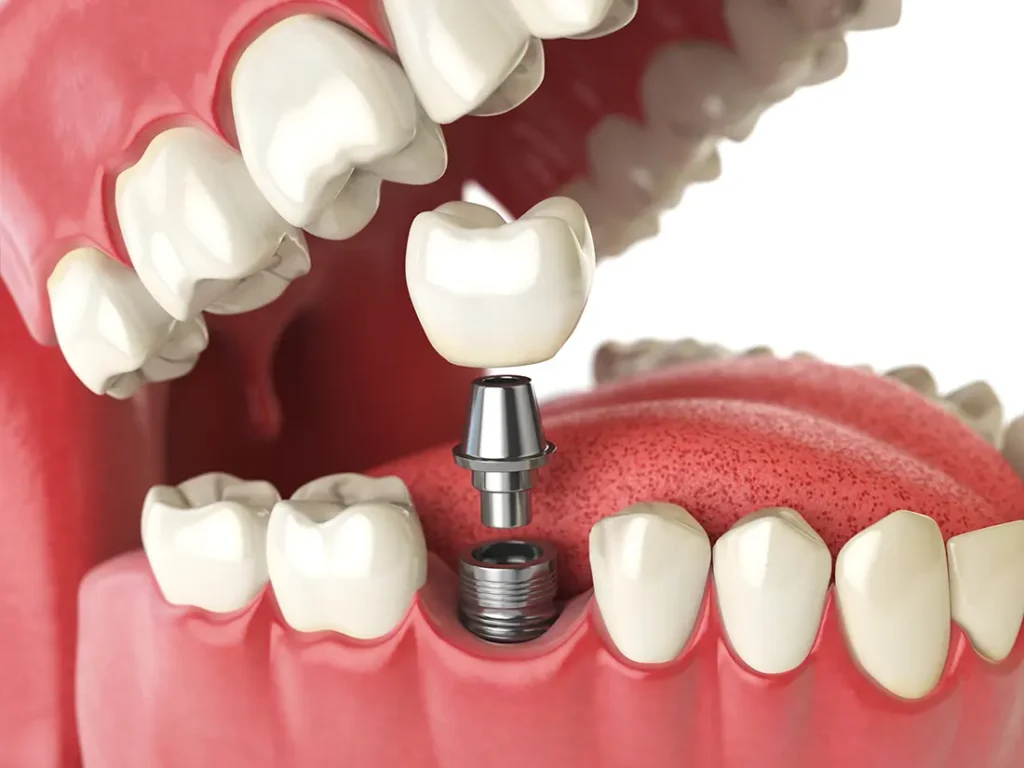
A regular dental crown caps a tooth that’s still present but damaged or weakened, protecting what’s left of the natural structure underneath. An implant crown is different because there’s no natural tooth left to protect. Instead, a titanium implant post is placed directly in the jawbone to act as an artificial root, and once it has fused with the bone through a process called osseointegration, the crown attaches to that post rather than to a tooth.
That distinction matters for how the two procedures are planned. A traditional crown can often be completed once the tooth is prepared, while an implant needs time to integrate with the bone before the crown is placed on top, which usually stretches the overall timeline across a few months rather than a single visit or two. In the meantime, a temporary restoration keeps you looking and functioning normally while the implant heals. If a damaged tooth needs to come out first, we can typically plan that extraction alongside the implant timeline so you move through treatment in a coordinated sequence rather than a series of disconnected visits with different providers.
Not every patient is ready for an implant post right away. If a tooth has been missing for a while, the jawbone in that area may have thinned to the point where it can’t support an implant on its own, because bone tends to resorb once it’s no longer holding a tooth root in place. When that happens, a bone grafting procedure can rebuild the density needed before the implant is placed, adding a step to the timeline but giving the implant a much stronger foundation to fuse with.
We’ll evaluate your bone structure honestly before recommending a path forward, because starting implant placement too early can compromise the long-term result. Patients who need grafting shouldn’t see it as a setback so much as a necessary step toward a more predictable outcome down the road, and the extra healing time is a worthwhile tradeoff for an implant that holds up well over the years.
We handle implant placement, any necessary bone grafting, and the final crown fitting all under one roof, so you aren’t referred out to separate specialists for each phase of treatment. That continuity matters in Westchase, where patients want a provider who already understands their case rather than starting the explanation over at every new appointment.
We also want the cost to stay out of the way of getting care you actually need. We accept a range of PPO insurance plans, including Delta Dental, Cigna, Aetna, and MetLife, and we offer payment plans for patients without coverage. No insurance, no problem. We’d rather help you find a workable path forward than have you put off treatment over cost concerns alone.

A missing tooth doesn’t have to mean a lifetime of compromise for the teeth around it. Our team keeps the process personal, whether that means a straightforward implant crown, a conversation about bone grafting first, or comparing your options against a traditional crown or bridge. We built this practice around comprehensive, in-house care so patients of all ages have one place to turn for every stage of treatment.
If you’re in Westchase and missing a tooth that needs to be replaced, we’re glad to talk through whether an implant crown is the right fit for your case. You can contact our office to schedule a visit and get started.