New patients welcome. Call today to ask about digital X-rays, insurance, and payment plans, or book online anytime.
At Designing Smiles, we use digital radiography as part of our broader approach to preventive dentistry, giving Dr. Ryan Rose and Dr. Angela Hilton-Foley the detailed imaging needed to catch problems while they are still small and manageable. Our team believes that thorough diagnostics should never feel invasive, and digital X-rays reflect that philosophy by delivering high-resolution images in seconds rather than minutes.
Traditional dental film required chemical processing in a darkroom, which meant you would have to wait while images developed. If the exposure was off, they’d have to be retaken. Digital X-rays replace that film and the tedious process that went along with it by using an electronic sensor to capture the image and display it on a computer screen almost instantly.
This shift to digital sensors also means our team can enlarge, adjust contrast, and zoom into specific areas of an image without asking you to sit through a second exposure. It is a small technical difference that makes a meaningful clinical one, since the ability to magnify a suspicious area often reveals detail a standard film image would have missed entirely.
Book NowOne of the most common questions we hear from patients is whether X-rays, digital or otherwise, are safe. According to the U.S. Food and Drug Administration's guidelines on dental radiographic examinations, digital imaging may offer reduced radiation exposure compared with conventional film. The guidelines also cite a study finding that basing X-ray selection on clinical evaluation for asymptomatic patients can reduce the number of radiographs taken by 43 percent without a clinically consequential increase in undiagnosed disease. Lower exposure matters, particularly for families who bring children in for regular checkups and want to minimize cumulative exposure over the years.
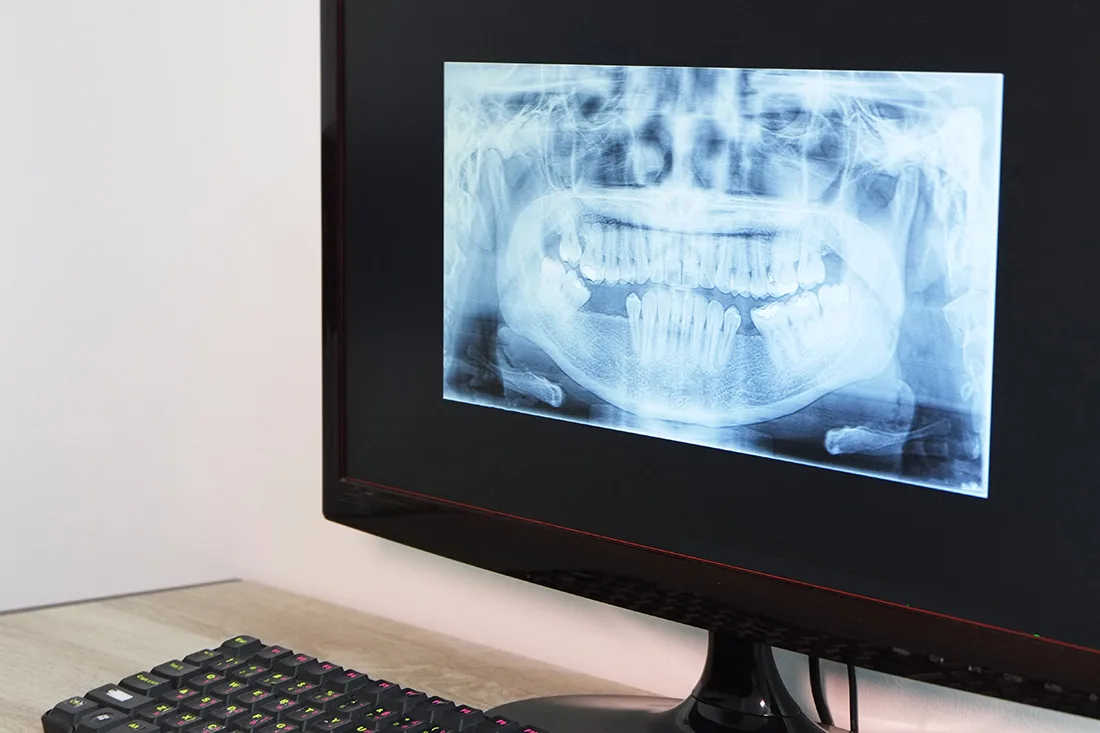
Beyond the safety advantage, digital images also eliminate the wait tied to chemical film processing. Since the image appears on-screen right away, we can review it with you during the same appointment, point to the specific area of concern, and explain the recommended next steps before the visit is even over. This immediacy also supports better recordkeeping, since digital files store cleanly and can be pulled up instantly for comparison at future visits, helping our team track changes in a tooth or the surrounding bone over time.
Not every visit calls for imaging, and our team follows a needs-based approach rather than defaulting to X-rays as a routine step. Digital radiographs become especially valuable during a diagnostic and preventive evaluation, where they help confirm whether a suspicious spot is early decay, a cracked filling, or simply a shadow from normal anatomy.
Digital X-rays are also useful for tracking the position of erupting teeth in children, evaluating bone levels around the roots in patients with a history of gum disease, and confirming healing after certain restorative procedures. Patients experiencing unexplained tooth pain or sensitivity greatly benefit from imaging that can pinpoint an issue a visual exam alone can’t detect, which is one reason our emergency dental services rely on digital radiography as a standard diagnostic tool when patients come in with sudden pain or trauma.
Comfort matters just as much as accuracy, and digital X-rays tend to be gentler for patients of all ages, since images are captured quickly and retakes are less common. That can make the process easier for children, patients with a strong gag reflex, or anyone who feels anxious about dental visits.
We know that a family-friendly practice needs to work for every generation walking through the door, from a toddler in for a first checkup to a grandparent managing longstanding restorative work. Faster image capture means less time holding still, fewer retakes, and a shorter overall appointment, which can make a big difference for young patients or anyone with limited patience for sitting still.
Digital X-rays work in tandem with routine dental cleanings and regular exams to give our team a complete picture of your oral health, both above and below the gumline. Catching a small cavity between teeth or an early sign of bone loss on an X-ray, well before it becomes visible or painful, is often what keeps a routine cleaning from turning into a much larger and more expensive procedure later.
For patients who are uninsured, we want to be clear: no insurance, no problem. Our office accepts a wide range of PPO plans, including Delta Dental, Cigna, Aetna, and MetLife, and payment plans are available to help make imaging and any necessary follow-up treatment more accessible.
Here are answers to common questions about digital X-rays.
Walking into any dental appointment can feel uncertain when patients do not know what the images will show. Dr. Rose, Dr. Hilton-Foley, and our team are committed to reviewing every X-ray clearly and honestly, explaining findings in plain language rather than clinical jargon, so patients always understand what we see and why we recommend a particular next step.
If it has been a while since your last set of dental X-rays, or if you are searching for a Westchase practice that treats imaging as a tool for prevention rather than an afterthought, we would love to see you. Contact our office to schedule an appointment and get a clearer picture of your oral health.